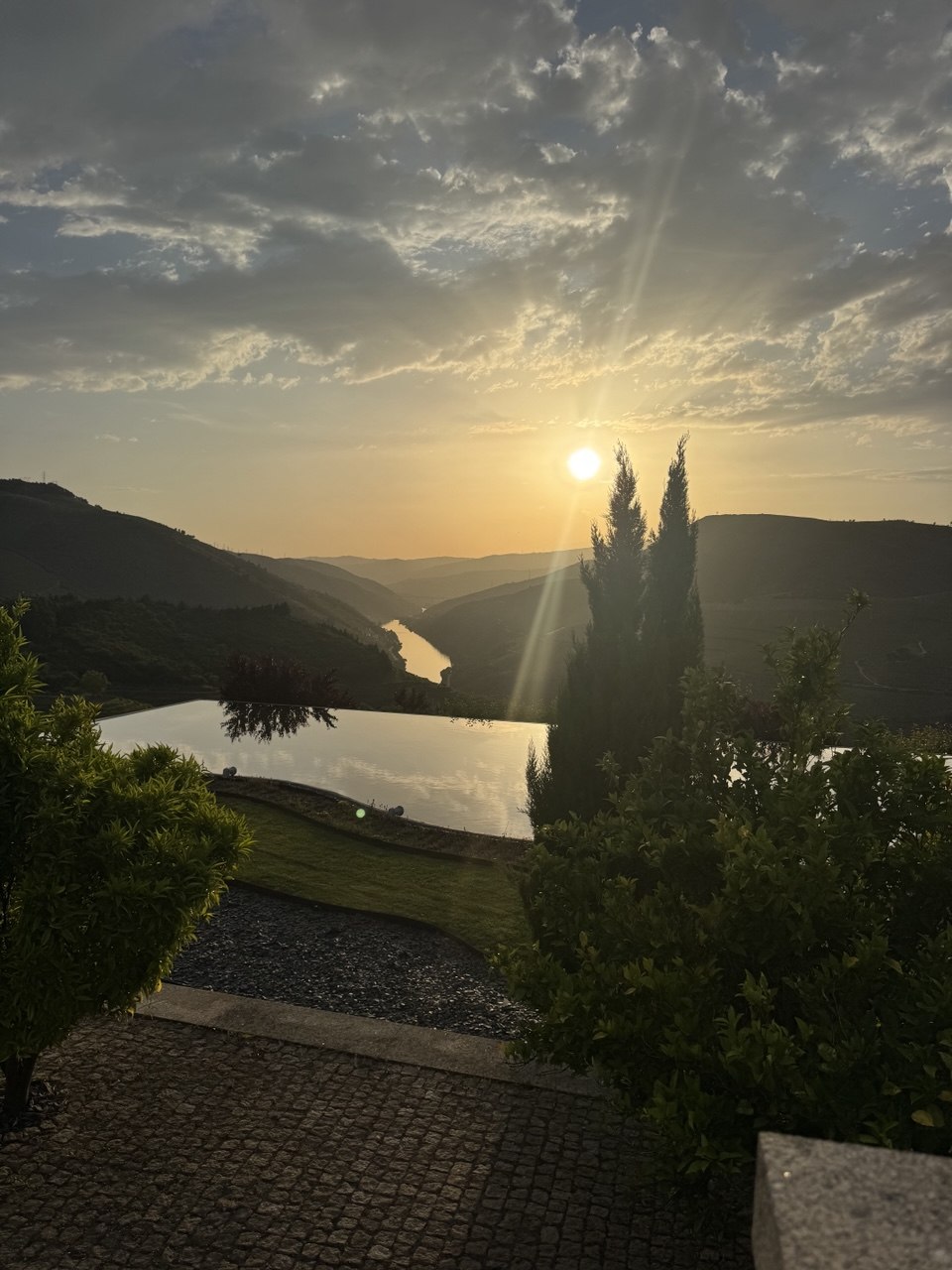
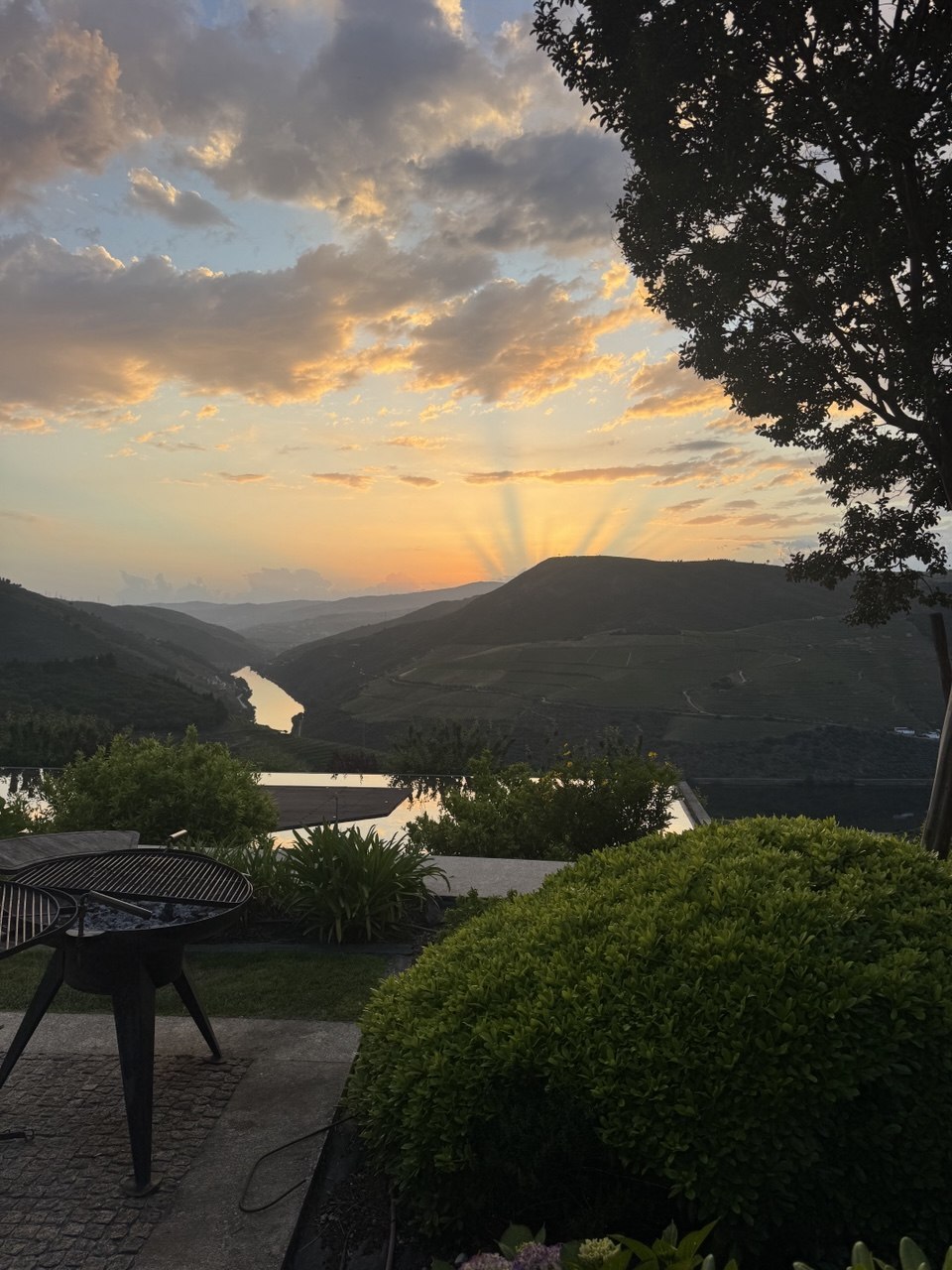
A luxury Douro Valley wine tour, the way the valley would have it.
An unhurried guide to Portugal's oldest demarcated wine region — its most exclusive estates, private tastings, and the rhythms that reward visitors who plan with patience.
A luxury Douro Valley wine tour is not measured in kilometres or in the number of wineries visited in a day. It is measured in the quiet hours spent on a terrace above the river, in the depth of a single vertical tasting, in the cellar master who pours a 1994 vintage because the conversation has earned it. The Douro rewards travellers who arrive willing to slow down — and it asks them to plan accordingly.
This guide is written for visitors who want the valley's most exclusive estates, its most private experiences, and the heritage that has shaped two thousand years of winemaking. It is not a list of tasting rooms. It is a map for an unhurried week.
Why the Douro is the world's most quietly luxurious wine region.
The Douro Valley is the oldest demarcated wine region on earth — established in 1756, more than a century before Bordeaux. Its terraces, hand-built into schist hillsides, were named a UNESCO World Heritage cultural landscape in 2001. Yet unlike Bordeaux or Napa, the Douro has stayed deliberately small in its hospitality. Most of its great estates open to a handful of guests at a time, by appointment only.
For a traveller, this is the rare combination: serious wines from a region with a thousand-year history, hosted in private settings, with no crowds to manage and no scripted tour to sit through. The cost of that intimacy is planning. The valley's most exclusive estates are not on a booking platform.
The experiences that define a luxury Douro wine tour.
Private estate tastings
Hosted personally by the winemaker or estate owner. Small groups of two to eight guests, walked through the vineyards, the lagares, and the cellar — closing with a guided tasting of current releases on a private terrace.
Library verticals
Seated, multi-vintage tastings drawn from the estate's own archive. Seven or more vintages of a flagship cuvée, often poured by the cellar master, with chef-prepared accompaniments matched to each pour.
Editorial dinners
Private dinners for up to ten guests, paired across the cellar's archive, held in a stone hall or river-facing terrace at sunset. Reserved for the small number of estates that maintain a working kitchen.
Vineyard walks at harvest
Late September into early October — the lagares run, the foot-treading begins, and the estate operates around the clock. A guided harvest walk is the most direct way to see the region's craft at full intensity.
River journeys by rabelo
Traditional flat-bottomed boats once used to carry casks downstream. A private charter from Pinhão or Tua, framed by the terraced hillsides, is the valley's signature arrival.
Helicopter and historic-train routes
For multi-estate days, a helicopter transfer collapses what would be three hours of switchback driving into fifteen minutes. The historic Douro Line train, hugging the river from Porto, is the slow and equally beautiful alternative.
When to visit the Douro Valley.
Late spring (May–June) is the valley at its most generous: the vines in full leaf, the river warm, daytime temperatures in the mid-twenties Celsius. Estates are open and unhurried. This is the right window for a first visit.
Harvest (mid-September to mid-October) is the valley at its most cinematic — and the hardest window to book. The lagares run, foot-treading happens after dark, and the great estates host only a handful of guests. Reserve at least six months ahead.
Autumn (late October–November) brings the schist terraces into copper and gold. Crowds thin, cellars are calm, and the estates have time to pour from the archive.
Winter (December–February) is private and quiet. The estates that remain open do so for their most committed guests; expect long lunches, vertical tastings, and unhurried cellar walks.
Native grape varieties to taste.
The Douro is home to more than a hundred indigenous grape varieties — a genetic library found nowhere else. A luxury wine tour should be planned around tasting them at the source, not at the airport.
- Touriga Nacional — the cornerstone red. Dark fruit, floral lift, slow tannic structure.
- Touriga Franca — perfume and elegance; the blending partner that softens Touriga Nacional's power.
- Tinta Roriz (Tempranillo) — body, savouriness, length on the palate.
- Sousão — high acidity and deep colour; increasingly prized as the valley adapts to a warming climate.
- Rabigato, Viosinho, Gouveio — the trio behind the valley's quietly ambitious whites: crystalline, saline, built to age.
A suggested seven-day itinerary.
- Day 1. Arrive in Porto. Slow evening in the Ribeira; first night across the river in Vila Nova de Gaia.
- Day 2. Historic Port-house cellar visit in Gaia. Afternoon train along the Douro Line to Pinhão.
- Day 3. First private estate tasting in the Cima Corgo. Quiet evening at the quinta.
- Day 4. Library vertical at a second estate. River lunch by rabelo. Sunset walk through the terraces.
- Day 5. Helicopter transfer to the Douro Superior. Tasting at a high-altitude single-parcel estate.
- Day 6. Editorial dinner — multi-vintage pairing in a private stone hall.
- Day 7. Slow return to Porto by the historic train. Final dinner overlooking the Douro mouth.
How to book the valley's most exclusive estates.
The estates that define a luxury Douro Valley wine tour do not appear on booking platforms. Many host only one party at a time, with the estate — for those hours — belonging entirely to that group. Reservations are made directly with the estate's secretariat, usually by personal introduction, ideally three to six months in advance.
For visitors planning a first private visit to the QMI estate, the most direct path is a written inquiry through our contact desk. We host personally, curate for very small groups, and reply within two business days.